> For the complete documentation index, see [llms.txt](https://docs.creativeconners.com/docs/llms.txt). Markdown versions of documentation pages are available by appending `.md` to page URLs; this page is available as [Markdown](https://docs.creativeconners.com/docs/spikemark-6/spikes/dynamic-spike-types.md).
# Dynamic Spikes
## Dynamic Spikes
Dynamic Spikes calculate positions on the fly. Dynamic Spikes determines the target position based on the starting point of a motor and then perform a calculation to get the final position. This makes adjustments quick and flexible.
## Why Use Dynamic Spikes?
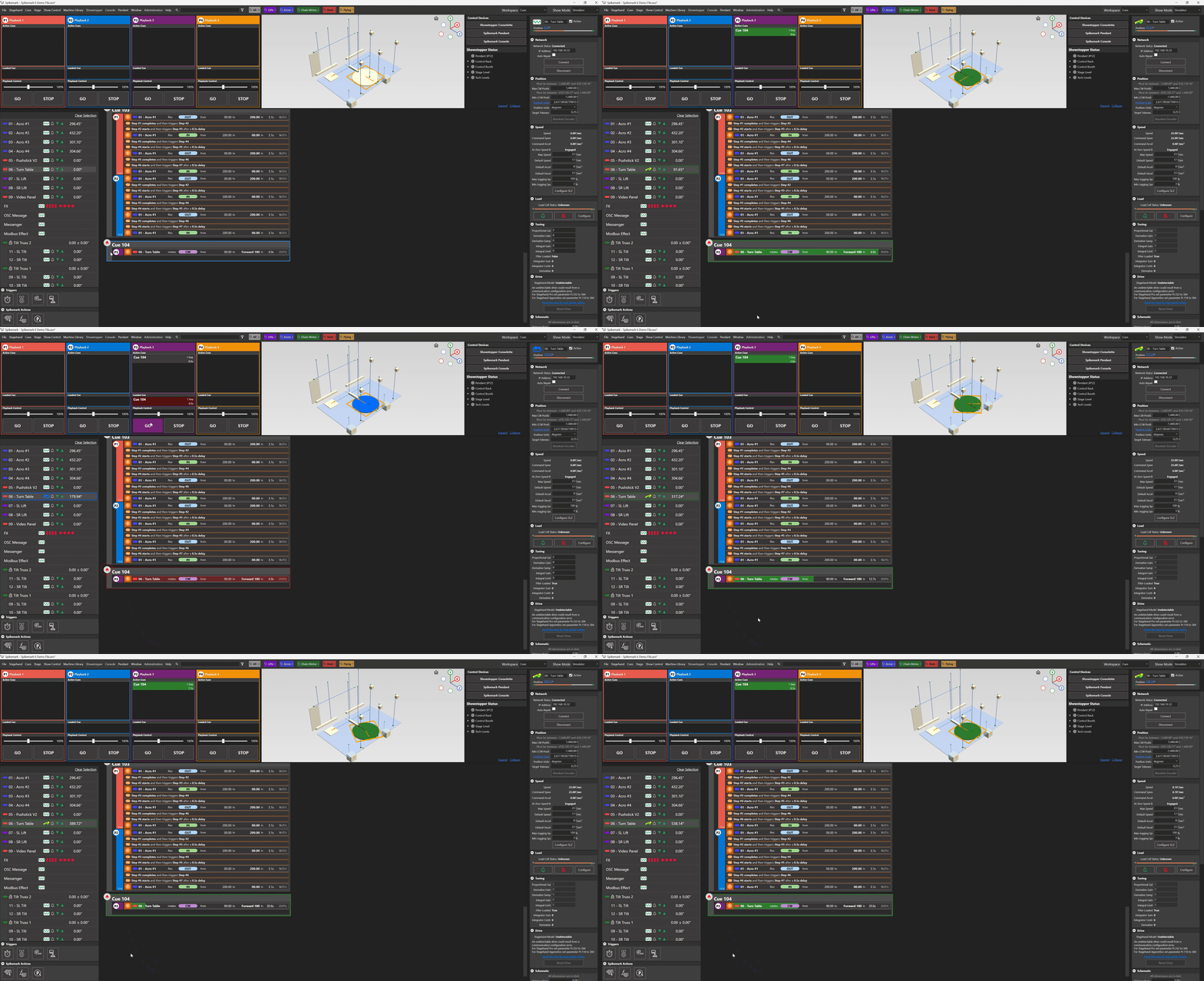
Dynamic Spikes are useful for situations where the target position is not fixed, such as when using a turntable, and you want to "go another 180 degrees" or you want to run the turntable to "the 3-O'clock position." Instead of having to write cues that go 180, 360, 540, etc., you can use Dynamic Spikes to go to the next increment of 180 degrees.
### Dynamic Spike Fields
Unlike Simple Spikes which have a concrete position they're targeting, Dynamic Spikes use up to two different fields to make the calculation.
#### Spike Factor
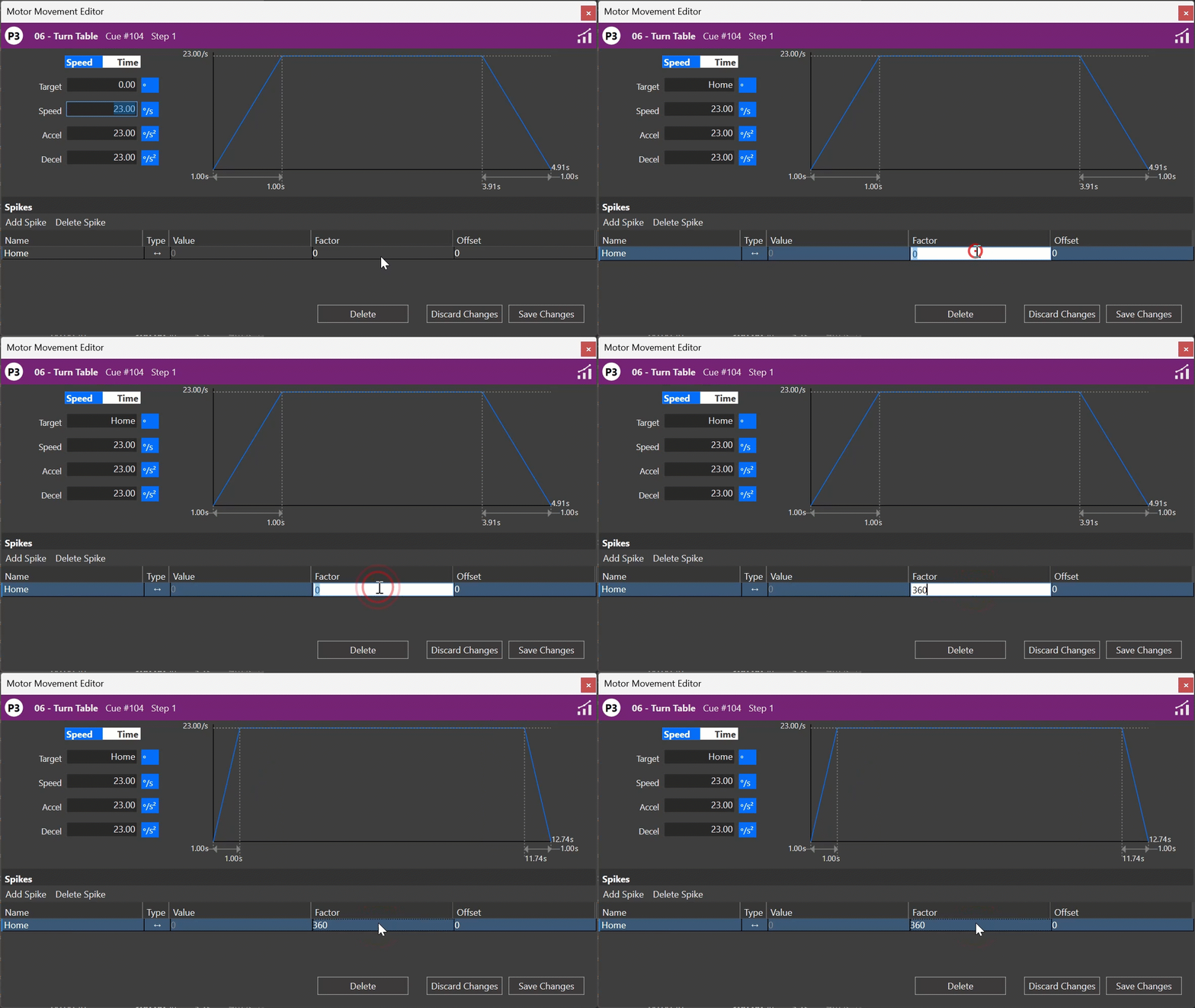
The Spike Factor is essentially the number of different physical locations a unit can be moved to. It is really only relevant for turntables and treadmills, or other machines that can have continuous motion in a given direction.
For example, a turntable only has 360 degrees of travel before it is back to its original position. A treadmill that has a matching paint pattern every 2' could use a 24" factor so that it would always match the paint.
#### Spike Offset
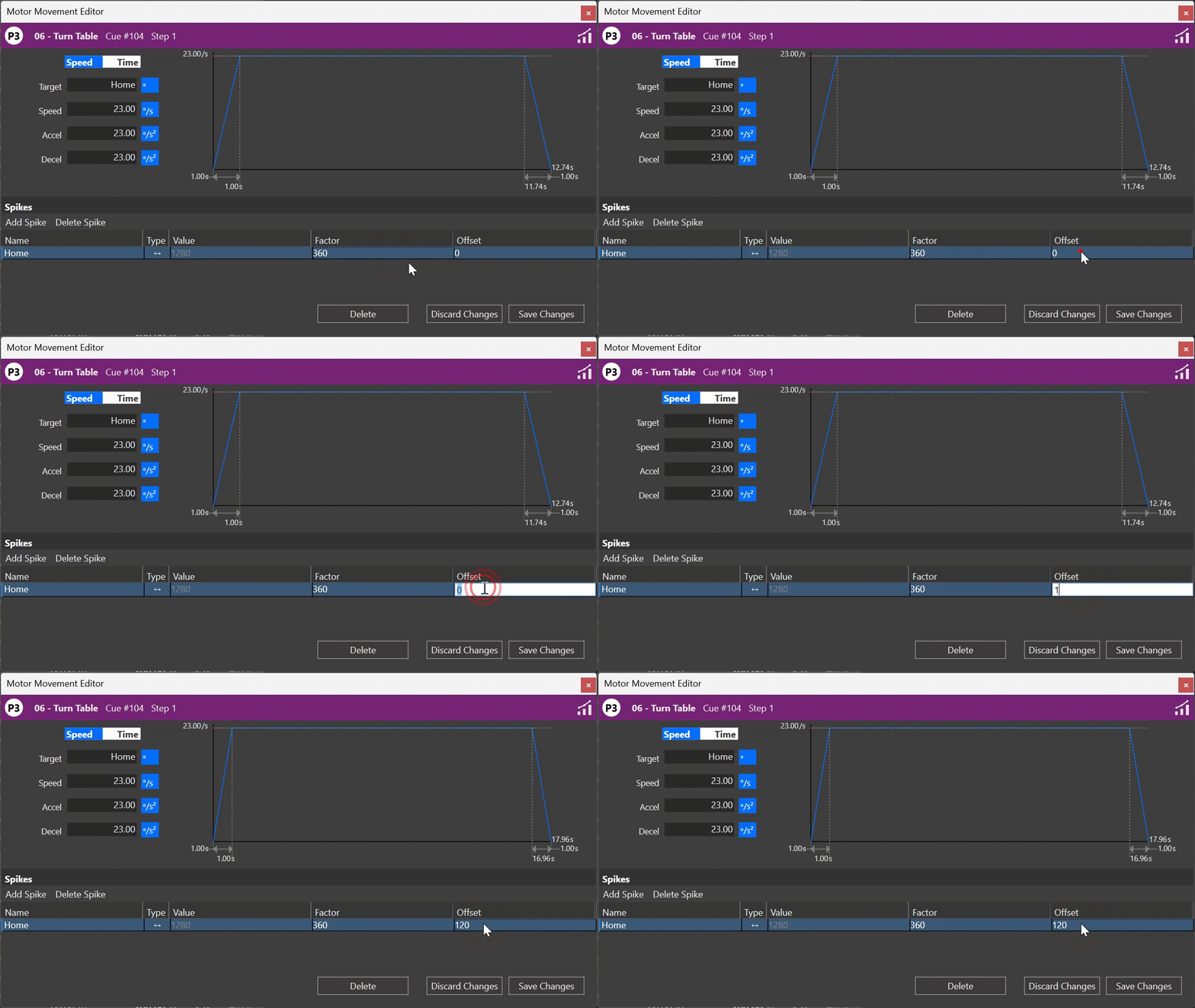
Spike Offset is the location away from the origin.
{% hint style="info" %}
Check out our section on [**Cue Movements**](https://github.com/creativeconners/PublicDocumentation/blob/main/spikemark-6/spikes/movements/motor-moves.md#4-spikes) to learn how to use Spikes in a cue.
{% endhint %}
---
# Agent Instructions
This documentation is published with GitBook. GitBook is the documentation platform designed so that both humans and AI agents can read, navigate, and reason over technical content effectively. Learn more at gitbook.com.
## Querying This Documentation
If you need additional information that is not directly available in this page, you can query the documentation by asking a question.
Perform an HTTP GET request on the following URL with the `ask` and `goal` query parameters:
```
GET https://docs.creativeconners.com/docs/spikemark-6/spikes/dynamic-spike-types.md?ask=&goal=
```
`ask` is the immediate question: it should be specific, self-contained, and written in natural language.
`goal` is what the user is ultimately trying to achieve, the reason they need the answer. Sharing it helps GitBook give you a better, more relevant answer. A goal is most helpful when it describes the outcome the user wants rather than restating the question. For example, with `ask=how do I create an API token`, a goal like `automate deployments from our CI pipeline` lets GitBook tailor the answer to that use case.
The response will contain a direct answer to the question and relevant excerpts and sources from the documentation.
Use this mechanism when the answer is not explicitly present in the current page, you need clarification or additional context, or you want to retrieve related documentation sections.